In most classrooms today, you’ll find a wide range of abilities. You may have a student who is still working on letter sounds sitting next to a student who is ready for multi-syllabic words. You know the key to reaching both of these students through differentiated instruction, but it can feel so overwhelming.
Differentiation feels like a thousand tiny decisions.
– What do I teach?
– Who can I group together?
– How do I challenge one student without leaving others behind?
– How do I plan for all of these students without spending my entire weekend prepping?
Today I’m here to help you see that it really doesn’t have to feel this way.
In this post, I share a simple shift that will dramatically simplify differentiation during small group instruction. This plan ensures you meet all of your students’ needs without spending your entire weekend planning for them!
Why Does Differentiated Instruction Feel So Hard?
It seems that for so many of us, differentiation has turned into overplanning.
Somewhere along the way, many of us internalized the idea that differentiating instruction means:
- Creating completely different lessons for every group
- Planning different activities, gathering different materials, and making different plans for each group
- Starting from scratch, multiple times a week for each group
When you’re teaching 3–5 different small groups, this type of planning is totally exhausting and truly unsustainable.

Keep the Routines, Change the Skill
The good news is that effective differentiation is NOT about creating brand-new lessons for every group. It’s about teaching different skills within the same instructional structure. Understanding this will change everything for you.
When the instructional routine stays the same, you’re not reinventing the wheel for every lesson. You’re not starting from scratch each week. You’re following the same consistent instructional routines.
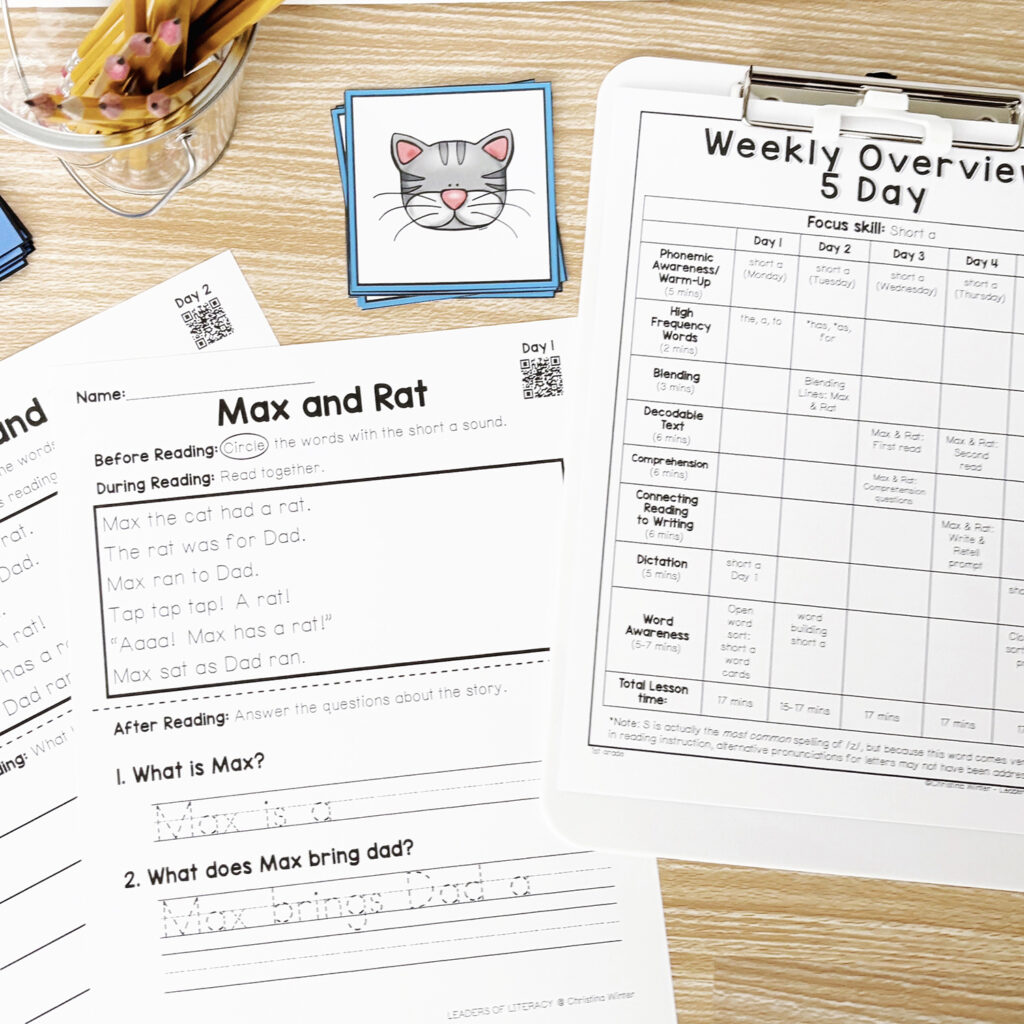
For example, inside Leaders of Literacy, every lesson begins with a phonemic awareness warm-up. One group may focus their warm-up on the short a sound, while another group is working on phonemic awareness with r blends. Then they both read decodable passages, but one group’s text focuses on short a, while the other reads a passage with r blends.
So remember…
👉The instructional routine stays the same
👉The skill changes based on the need of the group
This is the key to making differentiation attainable and sustainable.
Having Consistent Instructional Routines is KEY
Why having a consistent structure works:
- You’re not deciding how to teach each group. You just have to pick what skill to teach. This saves you an incredible amount of planning time.
- You can reuse familiar lesson components week after week. Your instruction becomes more efficient, and you make the most of your instructional minutes.
- Students benefit from repetition and clarity. They come to know what to expect and will thrive on the consistent structure and routine.

Instead of asking, “What should I do with this group next week?”
You’re just asking, “Which skill does this group need next?”
That shift removes so much of the decision-making and mental load.
A Simpler Way to Plan and Teach Your Small Groups
Your small group instruction doesn’t have to feel complicated or pieced together. With clear routines, aligned materials, and intentional, data-driven planning, it can become one of the most powerful parts of your literacy block.
Leaders of Literacy puts those pieces in place for you.
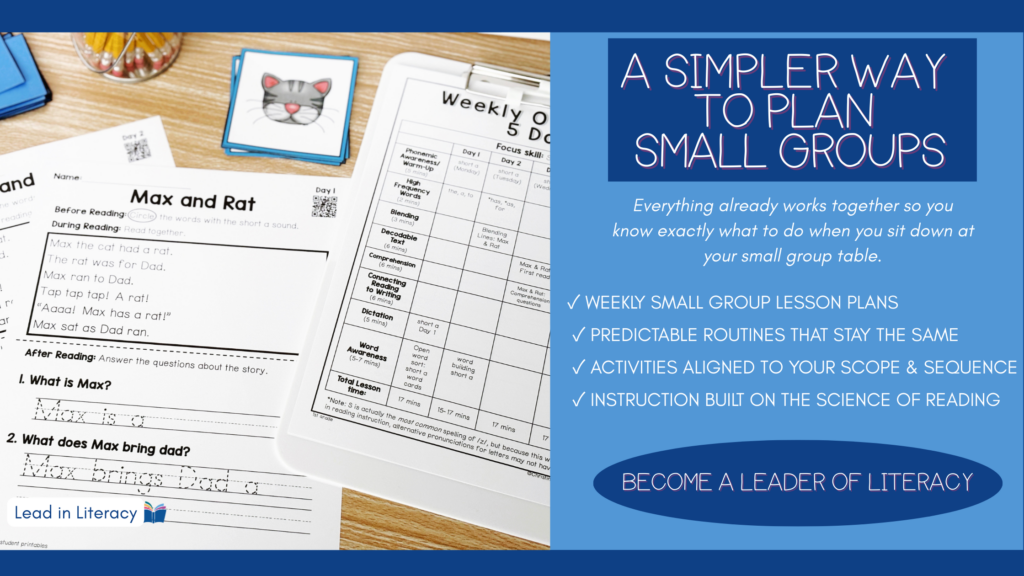
When you’re a Leader of Literacy, the plans are written, and the materials are ready. The instructional decisions have been made for you. Everything works together so you can provide targeted, differentiated instruction without having to start from scratch each week.
Become a Leader of Literacy and experience what it feels like to teach small groups with clarity and confidence.