It’s May. You’re tired, and your students are full of energy! Your schedule feels full, and the time you have left feels short.
When it comes to planning for small groups, you might be thinking, I just don’t have it in me to keep doing this. Small groups feel like a lot right now, and the idea of planning and managing them for the next few weeks feels exhausting.
Or you might be on the other end, feeling like there’s still so much to cover! Like you need to fit in one more push before the year ends, so your students are ready for what comes next.
Both of those feelings are real, and both can make small-group instruction feel like more work than it needs to be.
Today I’m excited to share a few simple shifts and tips for what to teach your students at the end of the year. They will help you make the most of the instructional time you have left and allow you to continue supporting your students as they prepare to move on to the next grade!
Give Students More Practice and Review
In his book, A Fresh Look at Phonics, Wiley Blevins states that a new skill should be systematically and purposefully reviewed for four to six weeks after being introduced for the first time and reminds us that once you introduce a new phonics skill you are “in it for the long haul”.
It can feel tempting to squeeze in new skills or try something different, but that usually leads to more explaining, more transitions, and less actual practice. Right now, the extra practice is what will benefit your students the most.

When deciding what to review, choose one or two skills that will have the biggest impact for your students. That might be something you’ve already been working on but want to strengthen, or a foundational skill that still needs more attention. Going deeper with a smaller focus gives students more opportunities to actually improve.
It also simplifies your planning. You’re not deciding what to teach next every time you sit down. Instead, you’re continuing the work that’s already in progress.
Keep Your Structure the Same
One of the most helpful things you can do is keep your small group structure the same. Inside Leaders of Literacy our members follow the same high-impact instructional routines all year long. At this point in the year, the familiarity works in everyone’s favor.
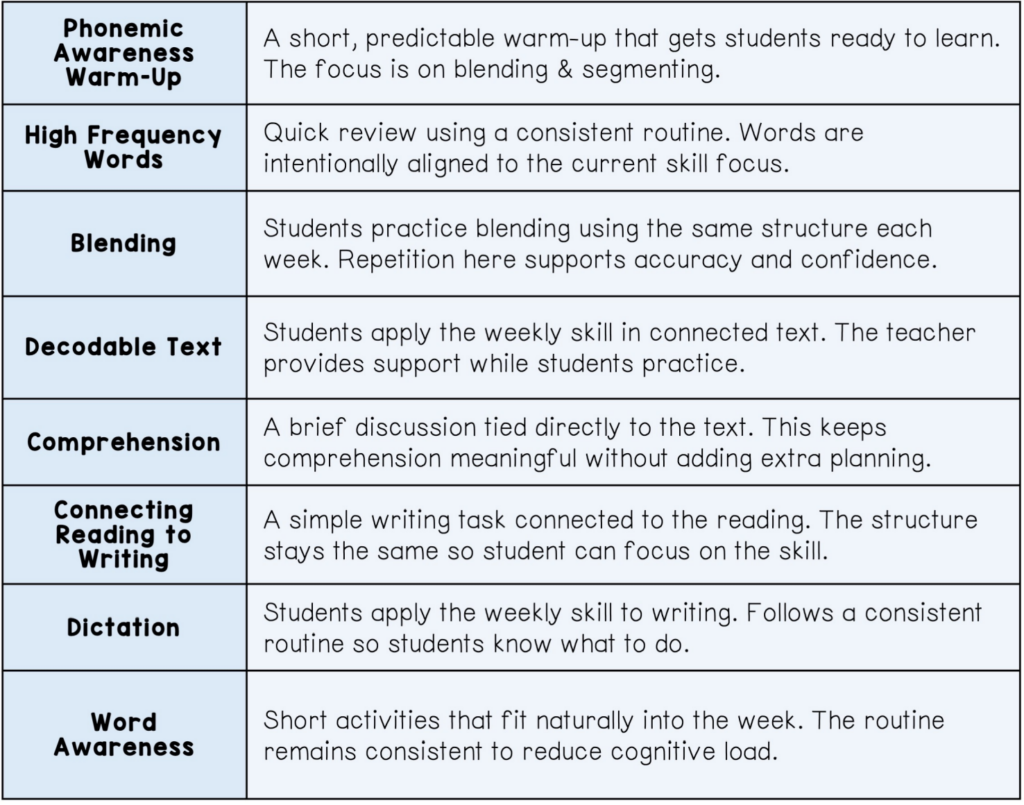
Teachers have the instructional routines down, and students already know what to expect. Everyone settles in quickly and focuses on the task instead of figuring out what to do. This is especially important at the end of the year, when attention and stamina are already a little lower than usual!
Focus on Activities that Allow for Application
We know it is essential that there is a tight connection between what children read and write, and what they have been taught. Application is how new skills stick. Here are 3 engaging activities that offer opportunities for students to apply what they have learned.
- Dictation is a great activity for the end of the year. Research shows that students learn letter-sound relationships and spelling as they write. Dictation practice offers students an engaging way to accelerate their writing and spelling skills, with your guidance and corrective feedback to support them.

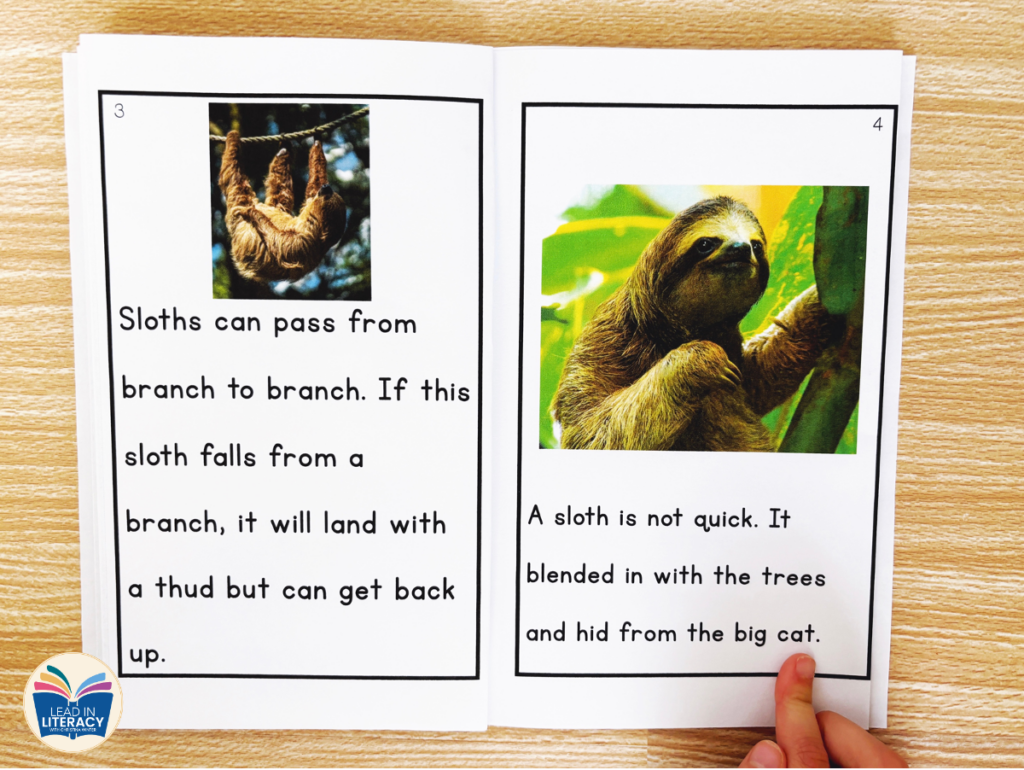
2. Reading decodable texts is another. Decodable texts give students practice applying the skills that you’ve taught to real reading experiences. This connection is essential for building a faster foundation in early reading.

3. Even rereading those same decodable texts can make a difference. Research shows that repeated readings boost students’ word recognition and automaticity, improves fluency and expression, enhances comprehension, and builds motivation and confidence. You can find a routine for repeated reading in this blog post.
I know May is a very busy month and the end is near, but there’s still time for students to make progress! You don’t need a new system or a new plan. Keep things clear, focused, and consistent, and I’m confident your students will keep growing, even in the final weeks of the year!
A Simpler Way to Plan and Teach Your Small Groups
Your small group instruction doesn’t have to feel complicated or pieced together. With clear routines, aligned materials, and intentional, data-driven planning, it can become one of the most powerful parts of your day.
When you’re a Leader of Literacy, the plans are written, and the materials are ready. The instructional decisions have been made for you. Everything works together so you can provide targeted, differentiated instruction without having to start from scratch each week.
Become a Leader of Literacy and experience what it feels like to teach small groups with clarity and confidence.