Small group instruction is an essential part of any literacy block. This is the time you have to help students fill in identified gaps, address their individual needs, and offer immediate corrective feedback. But before you can begin small group instruction, you must identify exactly what your students already know, what gaps they have, and what skills they need next.
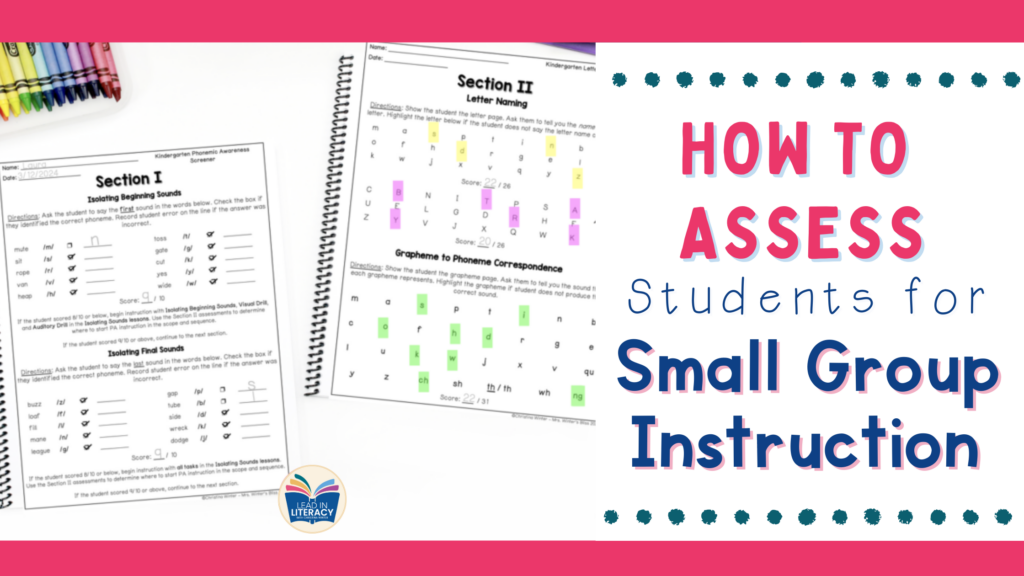
Today, I’m excited to provide you with a clear path for how to assess students for small group instruction, so you can make the most of this meaningful time together. Then I’ll offer you details about my phonics screeners and assessments for K, 1st, and 2nd grade. These diagnostic screeners assess phonemic awareness, reading, spelling, and more!
Start With the Reading Staircase
Before jumping into assessments, it’s helpful to understand the path most students take on their journey to becoming skilled readers.
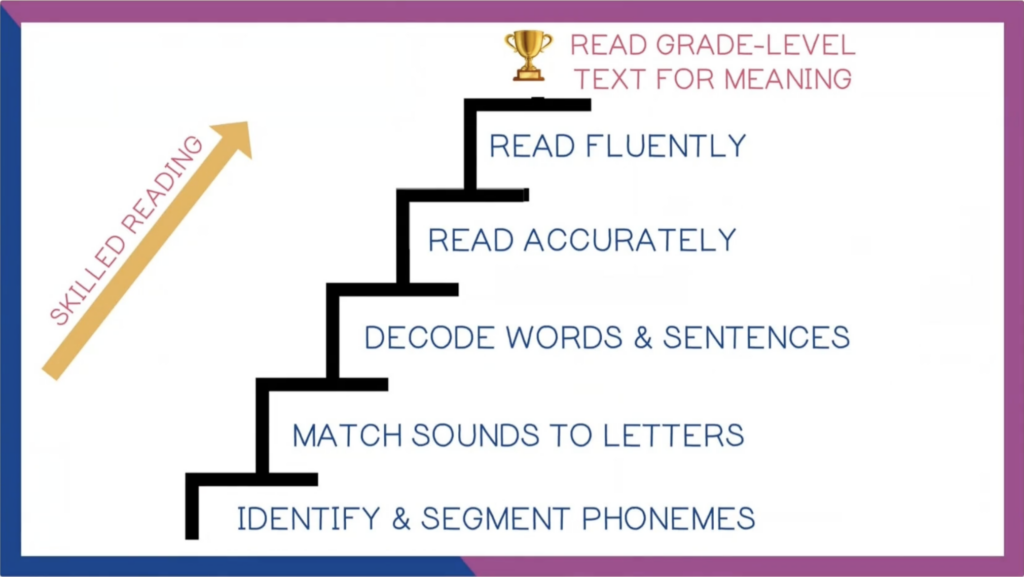
Students progress through these steps systematically. When we assess, we’re figuring out exactly where each student is on this staircase so we can support them in moving to the next step.
Assess Students Using a Universal Screener
Your first step in the assessment process is to administer a universal screener (e.g., Acadience, DIBELS, MClass, Fastbridge). These screeners are:
✔️ Brief and reliable
✔️ Scientifically based
✔️ Typically administered 3x/year
✔️ Designed to identify students at risk of reading difficulties
Why should you use a Universal Screener?
Universal Screeners give us information on whether our Tier 1 whole-group instruction is working for each student. They provide a quick snapshot of student skills to determine who is on track, and who may need additional support. Check out this blog post to learn more about Universal Screeners and what they commonly measure.
Dig Deeper With Diagnostic Assessments
Once a screener identifies a student as at-risk, the next step is to dig deeper using diagnostic assessments. Diagnostic assessments pinpoint the student’s lowest skill deficit. This is the precise place small group instruction should begin for the student.
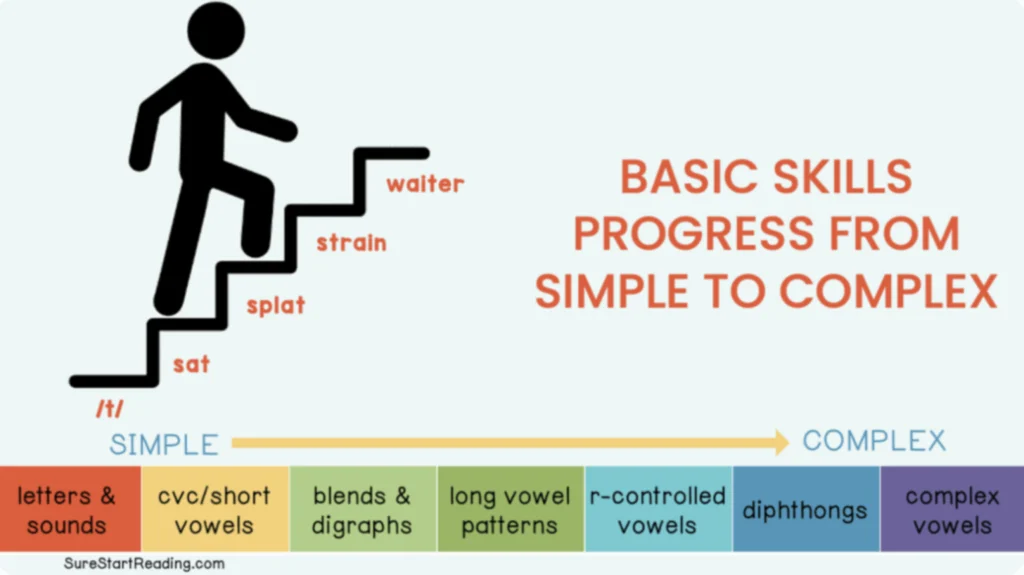
Your diagnostic assessments help place students on this reading skills continuum so you can confidently plan specific and intentional instruction that matches their needs. You can see exactly where they are and where they are going next.
Use Data to Form Flexible, Skill-Based Groups
Data from diagnostic assessment data doesn’t just tell you what skills a student needs; it also helps you group your students based on shared deficits.
Once you know where students fall on the staircase and skill continuum, you can group them by shared needs (not reading levels). These groups should remain flexible and shift as students master skills and progress.

Determine Next Steps for Instruction
With assessment data in hand, you’re now able to:
- Target instruction precisely at each student’s point of need
- Plan small group lessons with confidence
- Track progress over time
When we assess well, we know our EXACT NEXT STEPS for instruction. Giving students exactly what they need is what leads to real growth!
Quick Phonics Screeners for Kindergarten, 1st, and 2nd Grade
To help ensure your small group instruction meets the needs of your students, you must have access to quality phonics assessments. If your school does not provide you with assessments, I recommend these Phonics Screeners bundle for Kindergarten, 1st and 2nd grade.
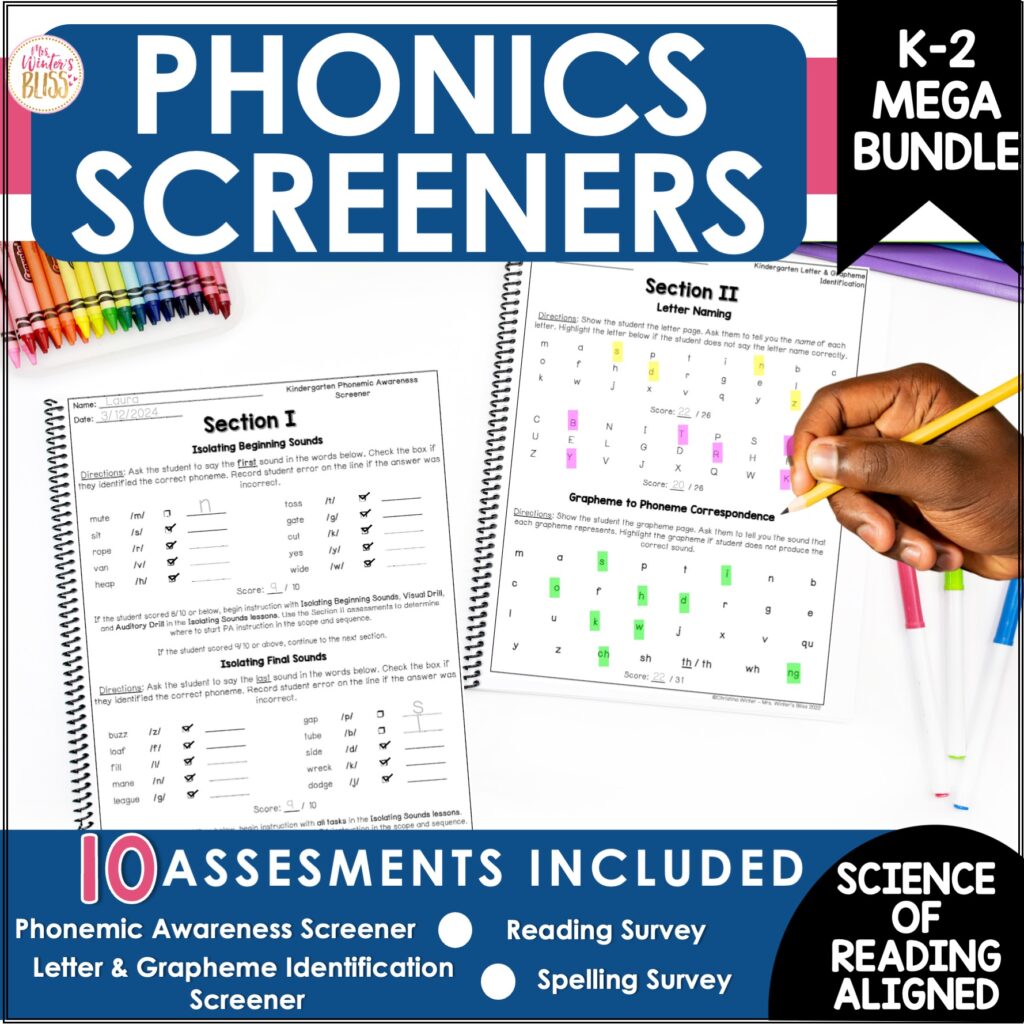
This bundle of K-2 assessments includes quick diagnostic phonics screeners for:
- Phonemic Awareness Screener (for K and 1st grade)
- Letter & Grapheme Identification
- Reading Survey
- Spelling Survey
- Autofill Student Data Trackers and MORE!!
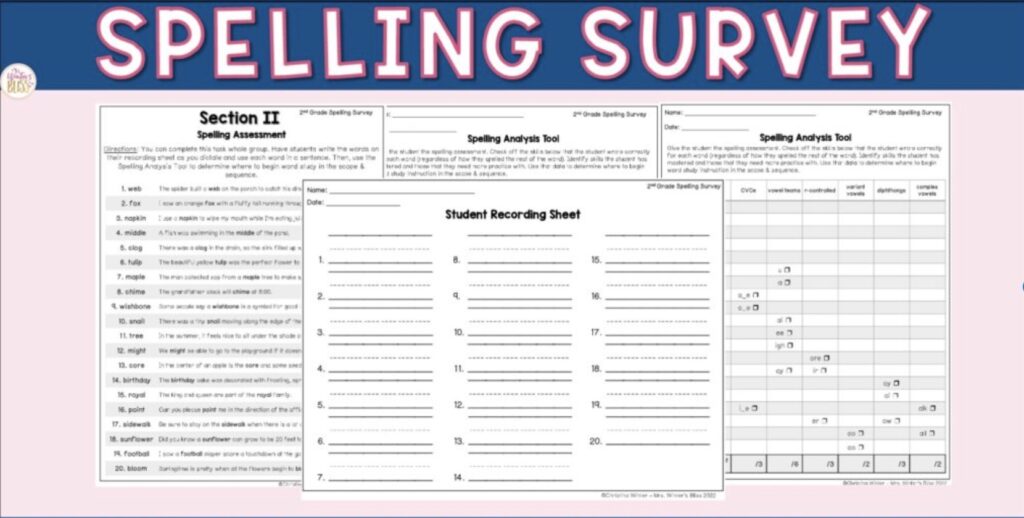
In addition to helping you group students, these screeners can be used as a diagnostic tool at reading benchmark periods (BOY, MOY, EOY), for report cards, or as a pre-assessment and post-assessment to measure student growth.
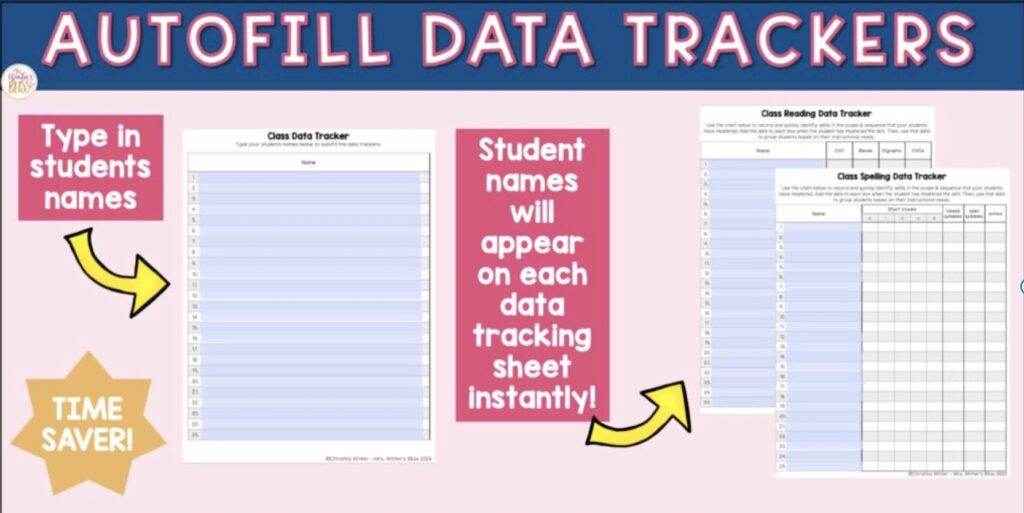
Finally, the resource also includes a helpful Instructional Decision Guide for teachers. This guide explains when to use each assessment, how to use them, and helps you determine when to stop using one with a student.
Click here for a closer look at everything included in the K-2 Phonics Screeners Bundle!
.
As teachers, we must make the most of every instructional minute. I hope the information and resources I’ve shared today help you identify your students’ exact needs so you can provide targeted instruction to help them become skilled readers.
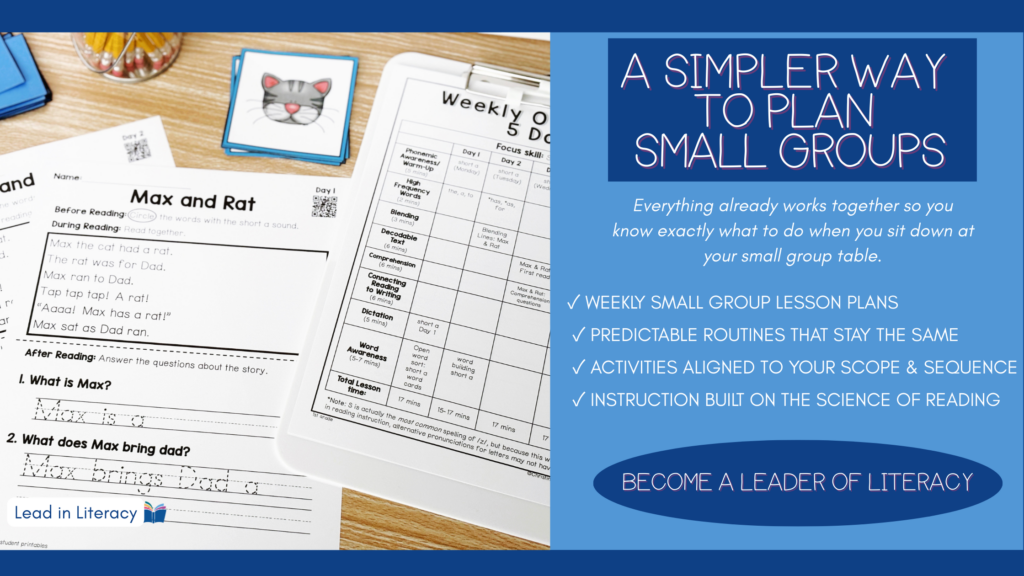
A Simpler Way to Plan and Teach Your Small Groups
Your small group instruction doesn’t have to feel complicated or pieced together. With clear routines, aligned materials, and intentional, data-driven planning, it can become one of the most powerful parts of your day.
Leaders of Literacy puts pieces of small group instruction in place for you.
When you’re a Leader of Literacy, the plans are written, and the materials are ready. The instructional decisions have been made for you. Everything works together so you can provide targeted, differentiated instruction without having to start from scratch each week.
Become a Leader of Literacy and experience what it feels like to teach small groups with clarity and confidence.