Learn my best-kept secret for running literacy centers and small-group instruction in Kindergarten, 1st and 2nd grade classrooms. It’s a simple move that will relieve stress and make everything run more smoothly.
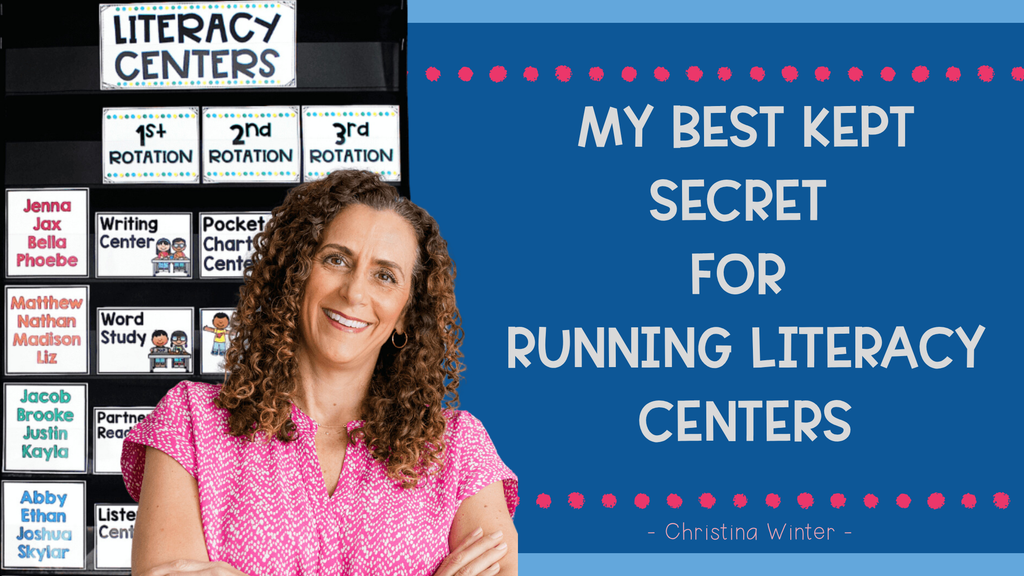
Picture your center rotation board….You’ve got your groups, your centers, and maybe a few arrows showing who goes where next. Somewhere in that rotation, there’s usually a spot that says “Teacher Table.” Most of us set it up that way, because every group needs time with you, so every group gets a turn. It makes sense, right??
But then the week actually happens. You realize that one group needs more time than their turn allows. A few students need a quick assessment. One group you are planning to see has 2 kids absent. Another group is ready to move on and you’d love to see them today, but the board says it’s someone else’s turn. So you stick with the rotation plan on the board, even though you know it’s not exactly the right fit for the day. Or maybe you stop and reshuffle everyone, leaving you flustered and students confused about where they are supposed to be.
But I promise you it doesn’t have to be this way, and today I’m excited to share how.
My Best Kept Secret for Running Literacy Centers
This little secret is always a lightbulb moment for so many and will change the way your centers run. Here it is: leave the teacher table off the rotation board.
That’s it! Your students rotate through their centers as they normally would; you just aren’t one of the stops listed on the rotation chart.
Why I Leave the Teacher Table Off My Literacy Center Rotation Board
It is a small change, but it gives you something big you didn’t have before: flexibility. You can pull whatever group you need to see that day. Maybe it’s your most fragile readers, because they need you the most. Maybe it’s three students for a quick assessment. Maybe it’s the group you couldn’t get to yesterday. You’re deciding based on what’s happening with your students, not what the board says.

When I share this tip, teachers often ask, “But what about the center they were supposed to do? Do they have to make it up?” The answer is simply: “When you call a group to your table, they just come. It’s completely okay for them to skip the center they were supposed to be at.” I know that can feel strange at first, like they’re missing something. But time with you is more impactful than an independent center. Yes, I do believe centers are important. They provide the meaningful practice and review we know students need for mastery. But, your small group table is where the teaching happens, and that’s the time worth protecting.
How Often Should You Meet Each Small Group?
If you have 4-6 small groups, you simply cannot see every group every day. That is okay! Students who fall below tier 1 instruction (those who are wroking below grade-level) DO need to be seen every day. Students who are performing on grade level should be seen 3-4 times a week. Plan to see students who are above grade level 1-2 times a week. Ideally, each lesson is 10 to 15 minutes each, so you can fit in three groups a day. This post offers more information on how to schedule your small group instruction.
Now think about what a rotation board does with those numbers. It gives every group the same turn, and your groups don’t need the same turn. Your below-level group would see you as often as your strongest readers. When you’re off the board, you decide who comes to your table based on who needs you, not who’s next.
Sample Small Group Instruction Schedule for the Week
Let’s say you have four groups, and you see three groups each day. Here’s how a week could play out:
| Group 1 (below) | Group 2 (on level) | Group 3 (on level) | Group 4 (above) | |
|---|---|---|---|---|
| Monday | ✓ | ✓ | ✓ | |
| Tuesday | ✓ | ✓ | ✓ | |
| Wednesday | ✓ | ✓ | ✓ | |
| Thursday | ✓ | ✓ | ✓ | |
| Friday | ✓ | ✓ | ✓ |
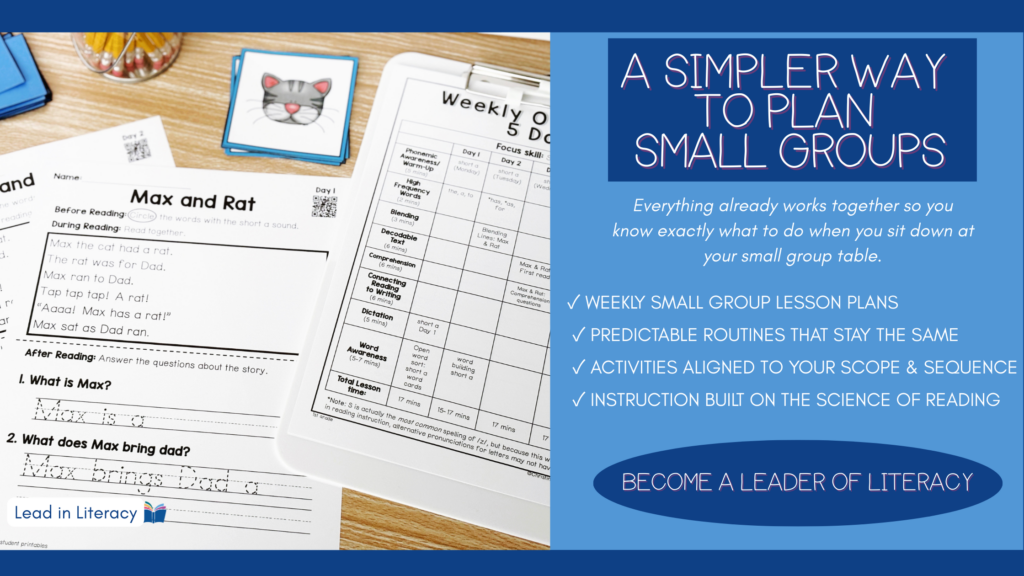
Your group below grade level sees you all five days. Each on-level group sees you four times, and your above-level group sees you twice. That’s fifteen small group lessons in a week, right in line with the guide. And don’t stress! I know 15 small group lessons sounds like a lot, but Leaders of Literacy has the lesson plans, student activities, and even the centers all mapped out for you. All you have to do is log-in, click on the skill you want to teach, and print the materials.
This is only a starting point. Nothing is set in stone. Maybe on Wednesday you realize your above-level group is ready to move on, or a few students need a quick assessment, or an on-level group needs one more day with the skill. Because you’re not on the rotation board, you can make that switch in the moment. Nobody waits for their turn to come back around, and nothing else on the board has to change.
Start Running Flexible Small Groups in Your Classroom Today
If you’ve been feeling locked into a rotation that doesn’t quite fit your week, try taking yourself off the board and see how it feels. Start small, maybe with just one group you’ve been wanting to see more often. And remember, the center rotation board is for your students. Your table is for whoever needs you most that day.

A Simpler Way to Plan Flexible Small Groups and Centers
Flexibility feels best when you’re not also building every lesson and every center yourself.
That’s where Leaders of Literacy comes in. The lesson plans are already written, and the materials are ready, You don’t have to decide what to teach or search for activities every time you want to pull a group. You can provide targeted, differentiated instruction without having to start from scratch each week.
With clear routines, aligned materials, and intentional, data-driven planning, small group instruction can become one of the most powerful parts of your day.
Leaders of Literacy puts all of the pieces of small group instruction in place for you.